

22 / 09 / 2026 · J-016
The pieces are here. The head build comes next.
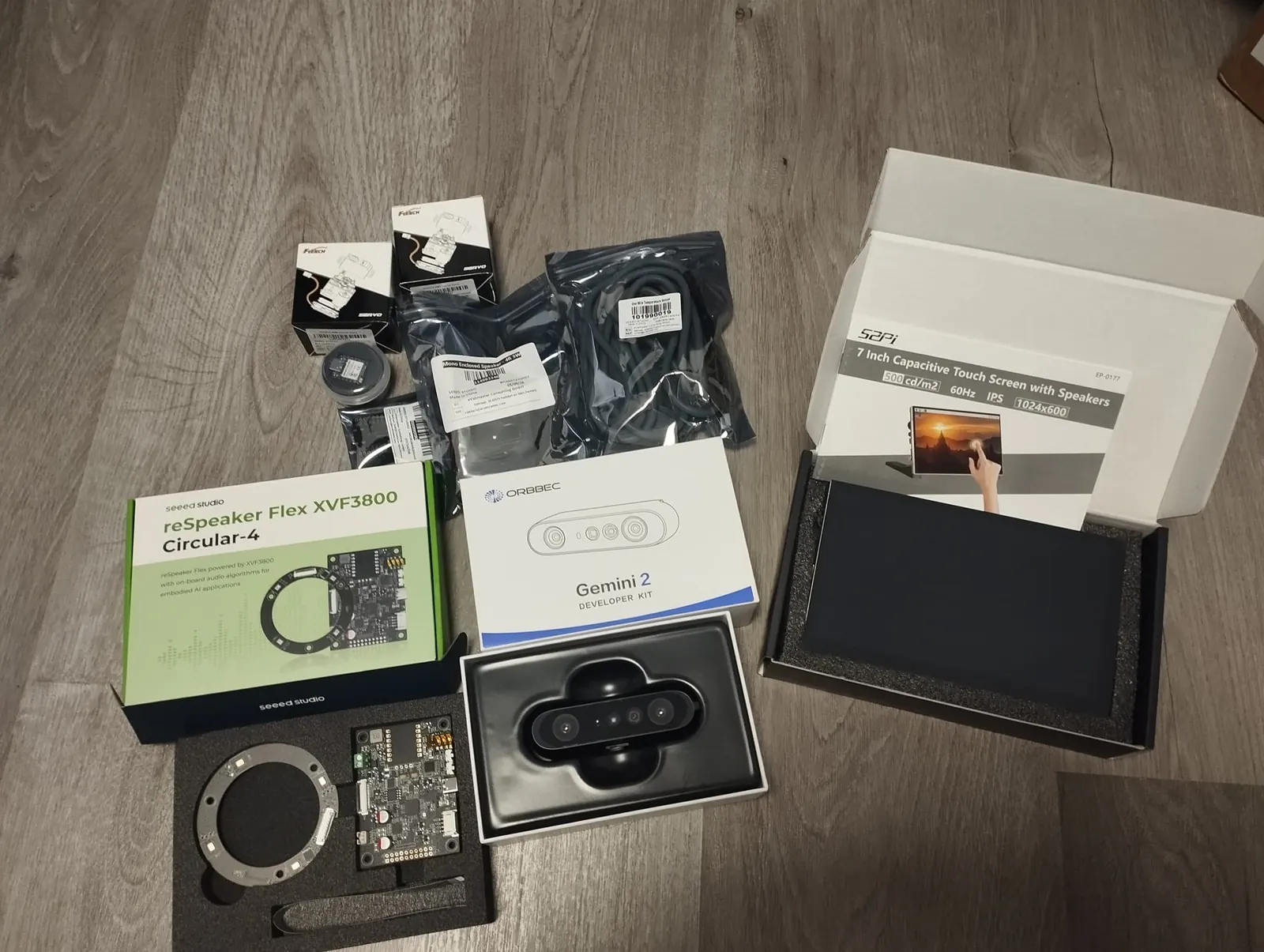
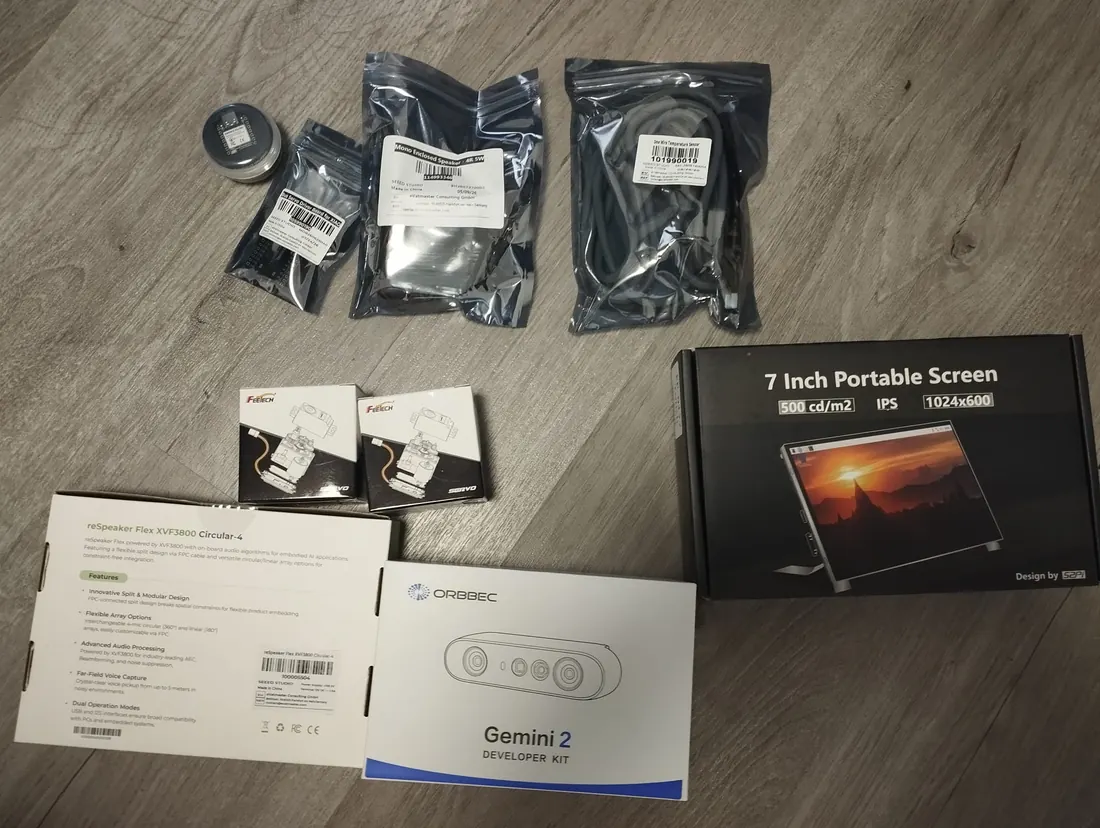
The hardware for the next stage of Evopien has arrived. Through our collaboration with Seeed Studio, we now have a set of components to begin bringing the head prototype into physical form: audio, vision, a display, control electronics and the first parts for the neck mechanism.
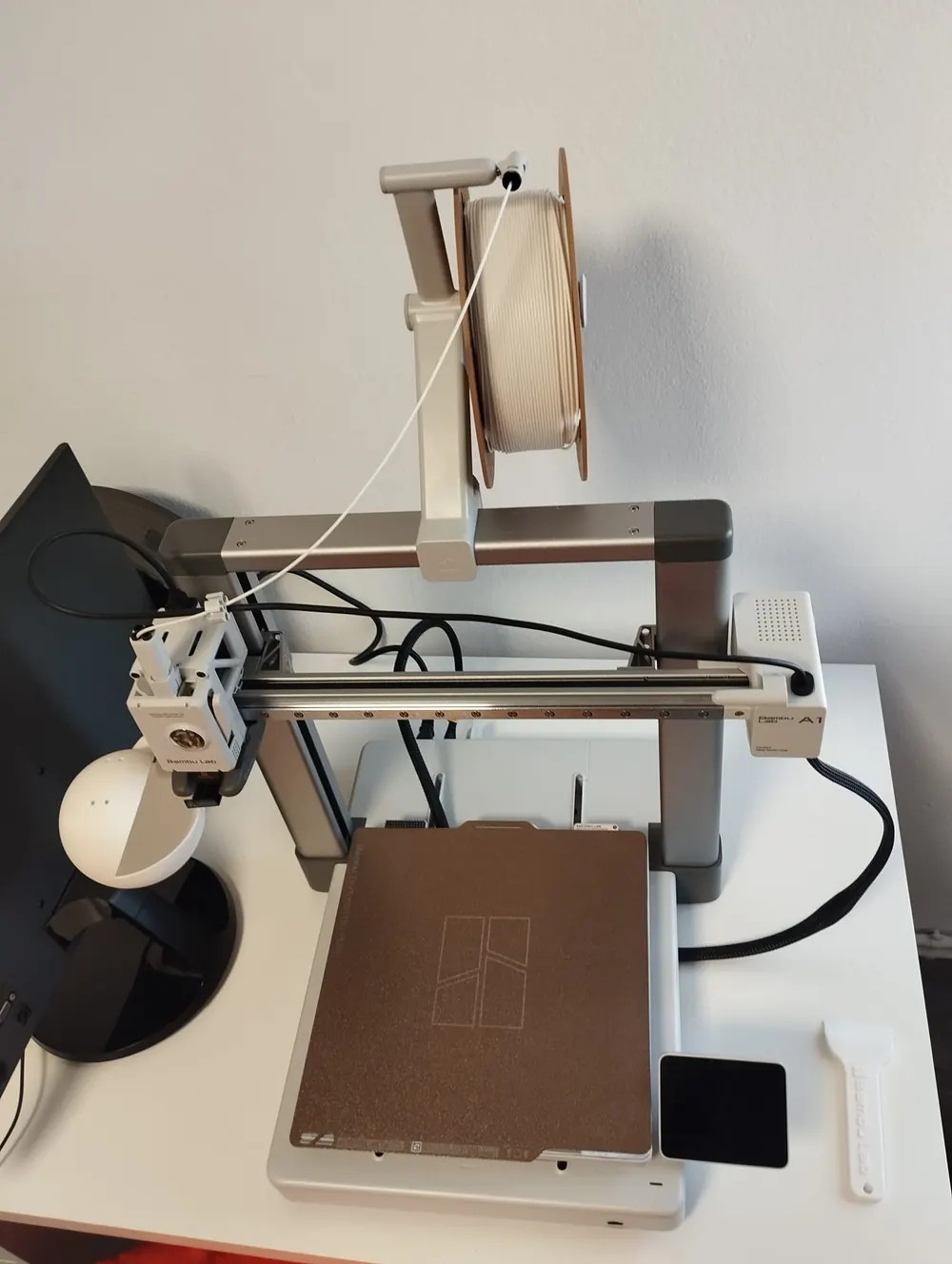
Our Bambu Lab A1 3D printer has also arrived and is set up in the workshop. Alongside the software work on Jetson AGX Thor, we can now prepare to design, print, fit and revise the parts that will hold the head together.
01 / The collaboration
Thank you, Seeed Studio.
A huge thank-you to the entire Seeed Studio team for supporting Evopien and providing the components for this stage of the head prototype. Thank you for the time spent discussing the build, helping us work through component choices and making this delivery possible.
For an independent project, having that practical support makes a real difference. These parts give us something concrete to build around: a microphone array to integrate, a camera to position, a display to test and a control path to develop. We appreciate the trust in the project and the opportunity to share the process as it takes shape.
What arrived for the prototype
Each component has a planned role. Its final placement and behaviour will be determined through the head build and bench tests.
- reSpeaker Flex XVF3800 Circular-4
- The microphone array for exploring how Evopien hears from inside the head enclosure.
- Orbbec Gemini 2 3D camera
- The camera for the planned vision and depth-sensing integration.
- 7-inch IPS capacitive touch display
- A display to evaluate for facial expressions and the prototype interface.
- Two Feetech ST3215-C047 servos
- Actuators for developing the planned neck pan-and-tilt mechanism.
- Bus Servo Driver Board for Seeed Studio XIAO
- The interface for the servo-control work.
- Seeed Studio XIAO ESP32-S3
- A compact controller for the hardware interface.
- Mono enclosed speaker
- An internal audio-output option to test within the head.
- DS18B20 temperature sensor
- A sensor for monitoring temperature during hardware development.
02 / From drawings to parts
A printer for the iterations ahead.
The A1 gives us a way to turn the head design into parts we can handle, measure and improve. The first prints will help explore the shell, internal supports, component mounts and cable routing. A part that looks right on screen still has to fit the real microphone, camera, speaker and mechanism.
That process will involve trial fits and revisions. Space, access for maintenance, weight, heat, vibration and sound all matter when electronics move from an open desk into an enclosure. The aim is a head we can test and improve, with an internal layout that remains accessible as the project develops.
03 / The design direction
A first head, and a longer-term body.
These concept images show the visual direction we are exploring: an expressive head first, with a humanoid body as the longer-term ambition. The immediate hardware work focuses on the head and its stationary support. A complete body is a later stage.
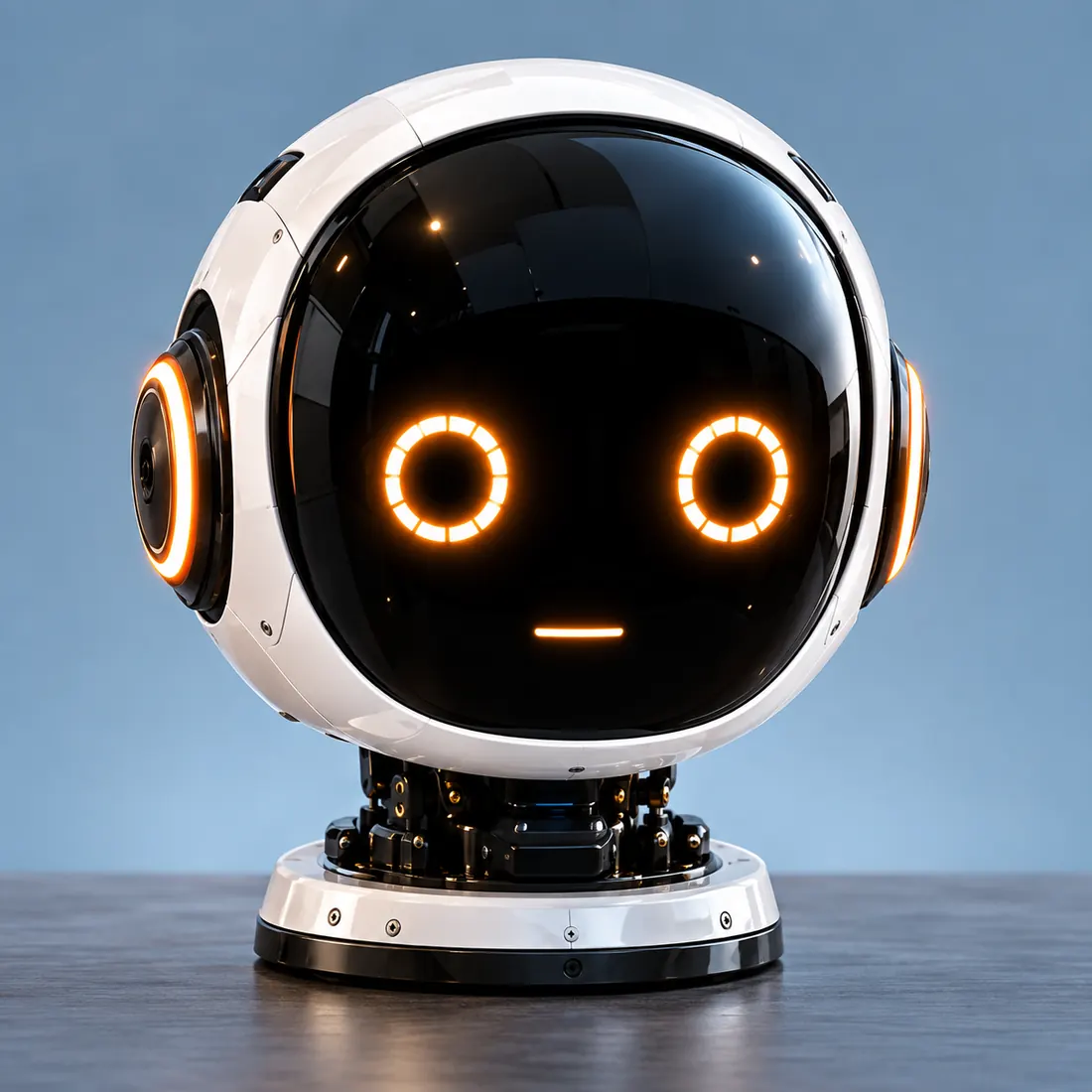
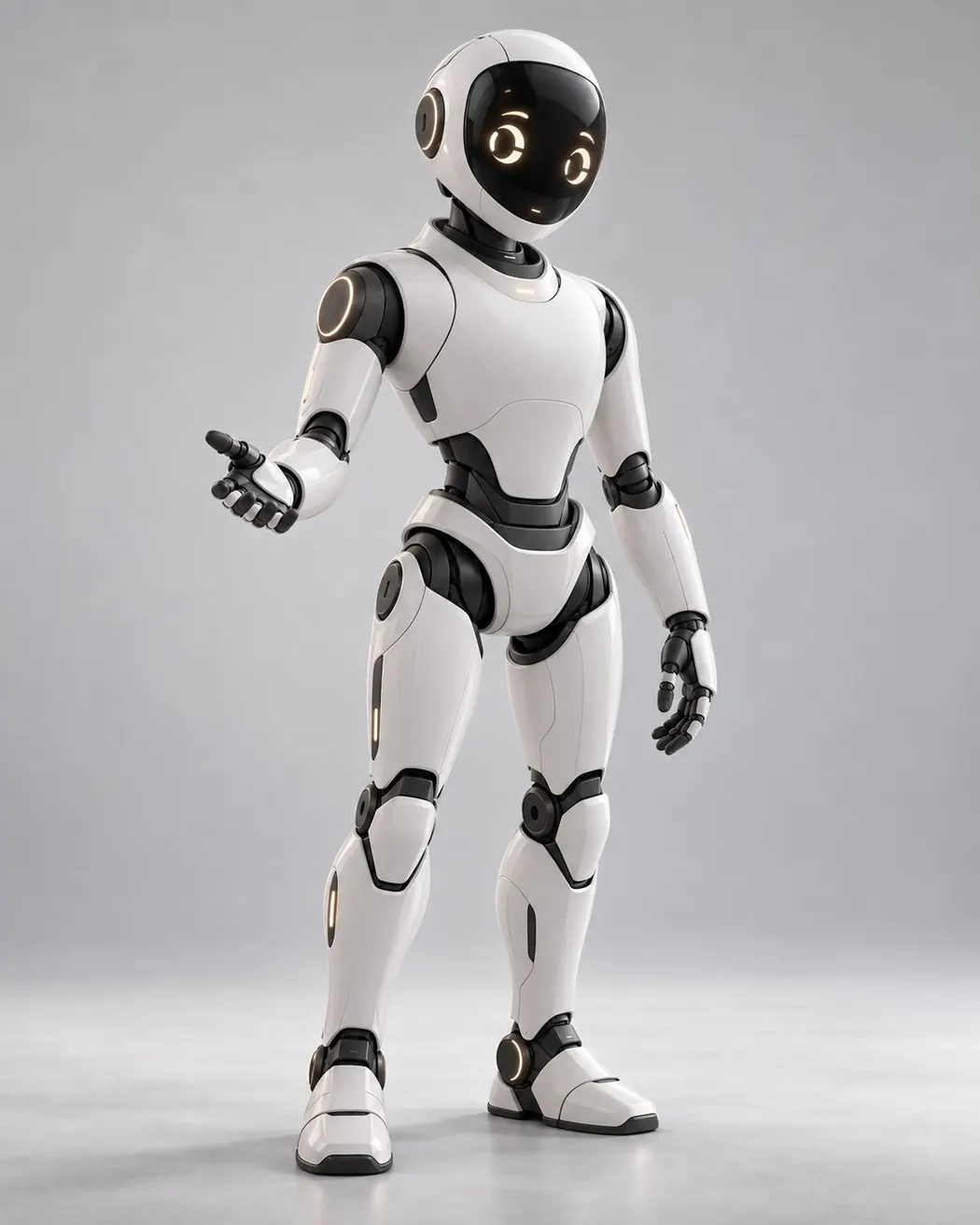
These are design visualizations, not photographs of completed Evopien hardware. The head view has been adapted from the supplied concept sheet. Shape, proportions, expressions and component placement may change as the physical prototype is developed.
04 / Software before assembly
Finish the current memory work, then move to the bench.
The immediate software focus is the governed-memory integration using Hindsight. The goal is to complete this implementation step and its checks during the week of 21–27 September, before turning our main attention to hardware. That is the target for the week, not a claim that the work is already finished or that every long-term memory requirement has been met.
The principle remains the same: Evopien Core owns identity, memory permissions and action authority. Hindsight is being integrated to support memory work within those boundaries. Choosing a memory package does not remove the need to check what is retained, what can be recalled, and how correction and deletion behave.
The planned next steps
- 21–27 September
Complete the current Hindsight integration work and review the remaining test results.
- Week of 28 September
Begin the hardware build process: inspect and measure the components, plan their layout, and start printing and fitting the head parts.
- During integration
Test the audio, camera, display and control interfaces individually, then bring them together in the enclosure. Check the required limits and stop controls before any powered movement.
The sequence depends on what the tests show. Starting the hardware process next week does not mean a finished head next week; assembly and integration will be documented as they happen.
Identity before embodiment. Now, the next physical step.
The body can change. The relationship should not. That remains the direction behind the work: build continuity and control into the system while developing the physical form around it. With the components here and the printer in place, the next stage is ready to begin once the current software checks are complete.
Thank you again to Seeed Studio for helping us reach this point. The next journal updates will follow the first prints, the head assembly and what we learn from the actual hardware.