

04 / 10 / 2026 · J-017
A fresh conversation. The right things still remembered.
The latest Evopien demo brings governed memory into everyday use: a preference shared in conversation, a useful observation saved deliberately, a new chat that starts clean, and information you can still inspect, change or remove.
After software rehearsals and a live recording on Jetson AGX Thor, we have preserved this version as a working-demo baseline. It is a meaningful step toward a companion that remembers with your involvement, while leaving room to improve the response time, speech recognition and some edits to saved information.

Recorded demonstration / 4 October 2026
Evopien | An AI Companion That Remembers What You Choose
Watch the recorded Evopien demo shared by the project owner for this checkpoint. The article below explains temporary and deliberately saved memory, bilingual conversation, camera input and public-web research, together with the remaining limits.
The project owner’s recording accompanies the preserved working-demo checkpoint.
01 / The memory boundary
Keep the conversation useful. Choose what lasts.
During an open chat, Evopien uses the conversation so far to follow questions, retrieve something you said earlier and continue a topic. Ordinary conversation belongs to that temporary context. Starting a new chat clears it.
A clear request to save something creates a different kind of continuity. The saved information is available after a chat reset, and the demonstrated durable-memory path also retained it across a database restart. Speaking to Evopien can provide that explicit instruction; using memory does not mean silently turning every conversation into permanent storage.
| Context | How it is used | After a chat reset |
|---|---|---|
| Current conversation | Follow-ups, earlier questions and information shared during this chat. | Cleared. A temporary code should no longer be recalled. |
| Deliberately saved memory | Relevant saved preferences and notes that you can inspect, correct or delete. | Still available within the current memory permissions. |
This distinction makes a reset meaningful. You can begin again without losing the specific information you chose to keep, and check what remains stored rather than having to guess.
02 / Useful in a normal day
Remember the preference and respect the next question.
A simple picnic request shows why continuity matters. Tell Evopien you are vegetarian and ask it to save that preference. Start a new conversation, then ask for a picnic for two. The saved preference can help it offer vegetarian choices without asking you to introduce yourself again.
Later, you can remove that food preference and ask for dishes for friends visiting at the weekend. The next recommendation should use the current saved information and the new request. Deleting a preference is a change to what may be used in future answers.
A picnic after a restart
A deliberately saved vegetarian preference remains relevant when a fresh chat asks for lunch ideas.
Brief electronics answers
A preference for short electronics explanations applies to that topic, without shortening every other subject.
More detail this time
You can ask for a fuller transistor explanation for this answer, then return to the saved brief preference.
See what is still saved
Inspection, correction and selective deletion let you check the result instead of relying on a reassuring reply alone.
The same conversation can move between English and Spanish. The goal is an interaction that follows the meaning of an ordinary request, including its topic and exceptions. Natural brief answers are the aim; an exact word count is not a promise of this demo.
03 / More than a typed preference
Useful notes can come from what you say, show or look up.
We have brought explicit saving into three everyday paths: conversation, camera observations and public-web research. You can ask to keep a useful explanation, a description of something shown to the camera, or information found during a search, then retrieve that saved note in a later chat.
The playing-card sequence made the visual path concrete: show two cards, ask to save the description, restart the chat and ask a follow-up about the saved cards. The durable item in this demonstration is interpreted text. It is not an archive of the camera image or raw video, and a model can still misread what it sees.
Saved notes can be revised and removed, with their current status affecting later retrieval. Replacing one detail inside a longer visual description remains an area for further work: the generated-video rehearsals exercised a card replacement, while a different replacement in the live recording was not saved correctly. We have retained that limitation alongside the progress.
Local conversation, with public sources when requested.
The demonstrated conversation uses local Qwen inference on Thor, with local speech processing and governed memory. Questions about current weather or a software version can use public internet sources. Those lookups require network access; running the conversational model locally does not make the public web an offline source.
A saved research note also needs its context. Information such as a weather forecast or release number can change, so recalling an earlier note should not be presented as a fresh verification.
04 / A face for the interaction
The head is taking shape on screen.
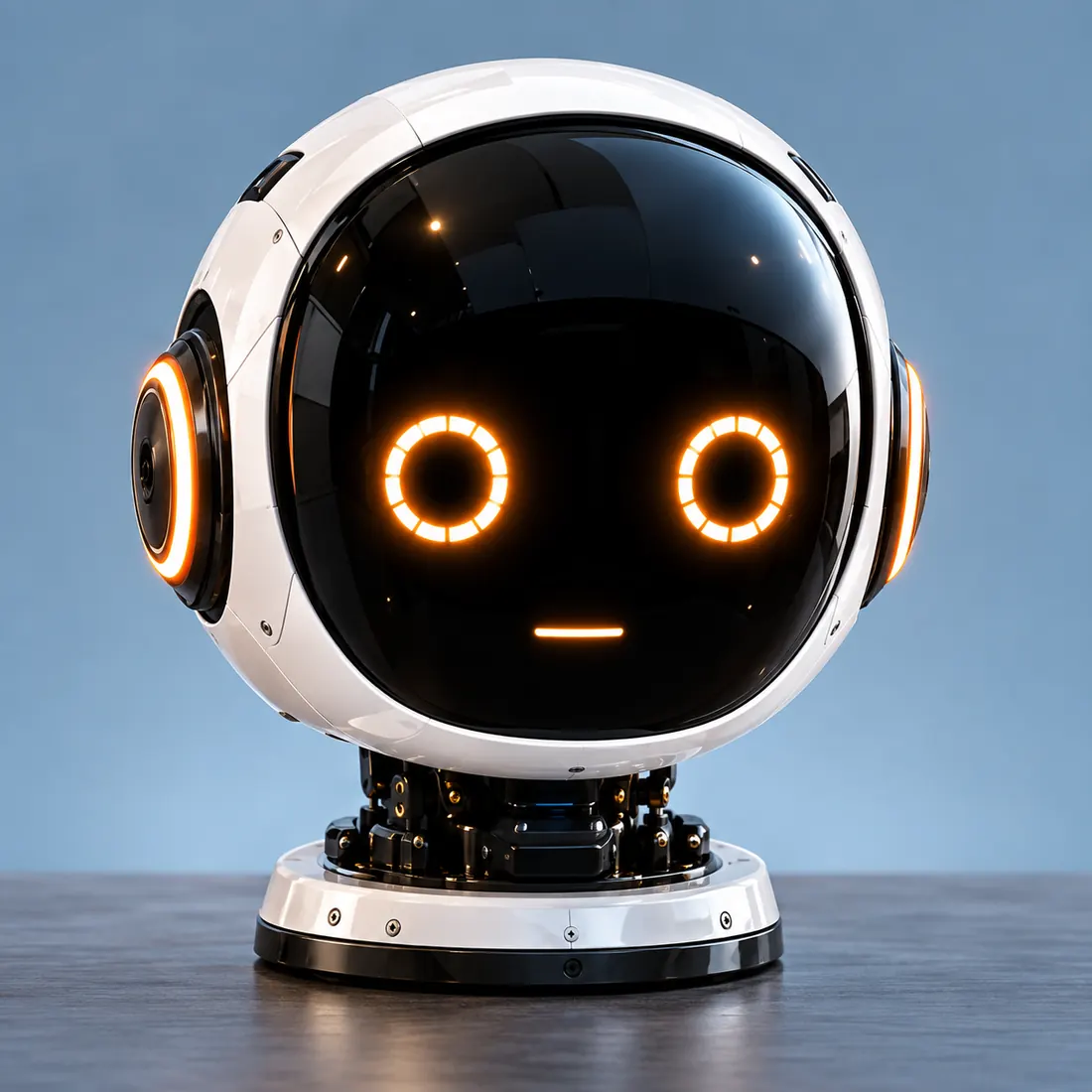
The 7-inch display now gives the conversation a visible presence: an amber face, expressions, speaking motion and camera-informed movement toward the person interacting with it. The console uses the same visual direction. We have worked toward a calm, warm character that leaves space for the person speaking.
This remains a screen-based head prototype. The face and head movements are software animation; a finished enclosure and powered physical neck are future work. Following a person and keeping the presentation fluid under model load still need further refinement.
05 / Practical support
A huge thank-you to Seeed Studio.
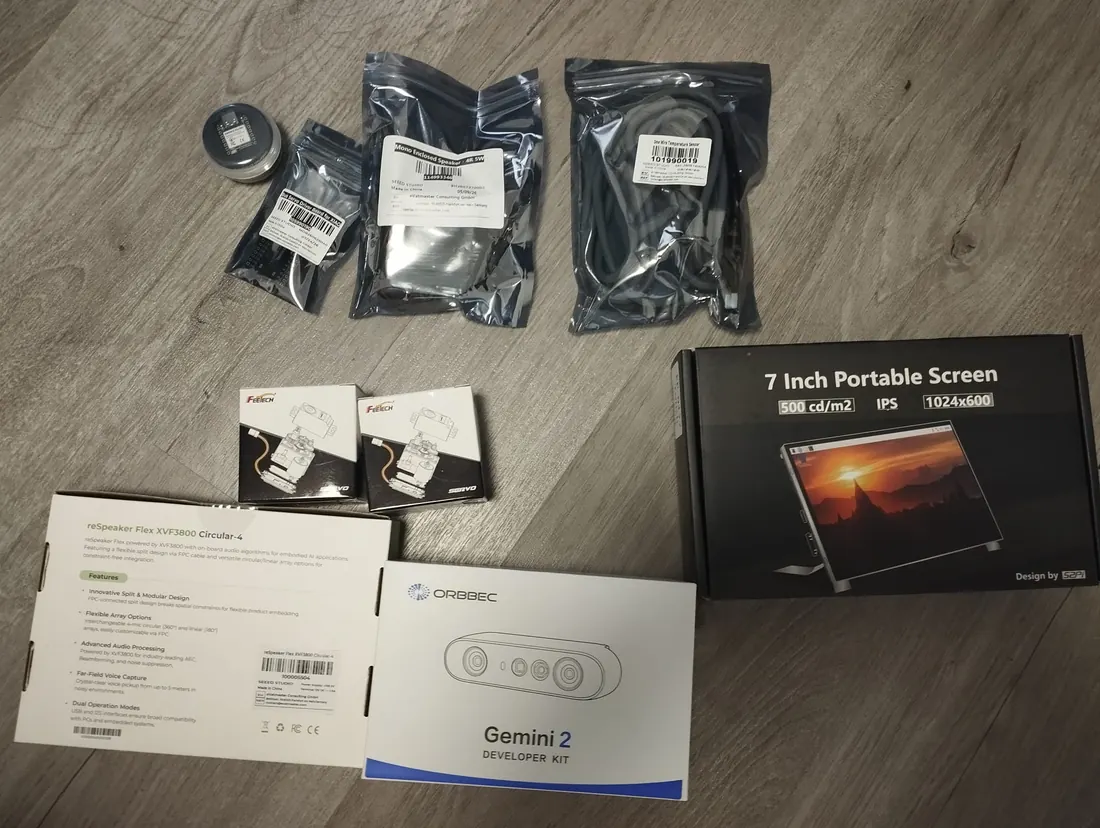
Thank you to the whole Seeed Studio team for providing the electronics that helped bring this stage of Evopien into a live demonstration. Your support has given an independent project the chance to try the interaction with real audio, vision and a dedicated display, and to carry those lessons into the future head build.
The components supplied for the audio, camera and display work include:
- reSpeaker Flex XVF3800 Circular-4 microphone kit
- The circular four-microphone array used for the Evopien side of the recorded demo.
- Orbbec Gemini 2 camera
- The camera used for Evopien's visual interaction and the head-integration work.
- 4Ω / 5W enclosed mono speaker
- The supplied internal speaker, tested for spoken output with the circular reSpeaker setup.
- 7-inch HDMI capacitive touchscreen · 52Pi EP-0177
- The dedicated display used for the animated head and the future enclosure integration.
These names identify the component makers and models; the Orbbec camera and 52Pi display were supplied through Seeed Studio. The older USB reSpeaker Array was purchased separately by the project owner and is not part of this supplied-hardware credit.
We appreciate the time, encouragement and trust behind this collaboration. Thank you for helping us turn the next part of the project into something we can actually test and share.
06 / Preserve what worked
A demo checkpoint, with the next work clearly recorded.
Before the final live trial, two repeated 33-question software rehearsals used the current local model, separate test storage, public-source lookups and generated video. They exercised saved preferences and notes, changes, deletion and multiple chat resets, including a database restart. Generated footage made the visual workflow repeatable; it did not replace a physical-camera or microphone test.
The later live recording was accepted by the project owner as a useful demonstration worth preserving. That acceptance and the software rehearsals are different kinds of evidence. Neither establishes unrestricted language understanding, flawless speech recognition, guaranteed response times or complete product readiness.
The working-demo version is now saved before further optimization. The follow-up list includes interpretation of partial note edits, recognition of spoken wording, faster responses, smoother presentation and outstanding wider repository checks. This is not a new Alpha release or a completed security or safety qualification.
This entry describes the visible capabilities, the tests' scope and the limits of the current demonstration. It leaves implementation mechanisms and private operational evidence out of the public account.
The next step is to improve this preserved baseline through focused, repeatable checks, then carry the software experience into the physical head. The aim remains practical continuity: Evopien can use what matters, and you can see and change what it keeps.